

Explicación de la prueba Blower Door
What Is a Blower Door Test?
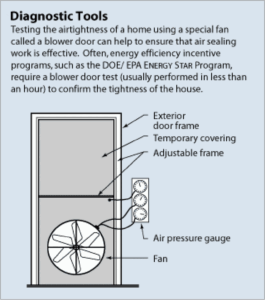
A blower door test uses a powerful, calibrated fan mounted in an exterior doorway. When the fan runs, it either pressurizes or depressurizes the house, creating a measurable pressure difference between the indoors and the outdoors. Air is then drawn through every gap, crack, and penetration in the building envelope. The tighter a home’s construction, the less airflow is required to achieve the target pressure change.
Building codes in states that have adopted blower door requirements specify maximum allowable air leakage at a standard test pressure of 50 pascals (ACH50):
-
Climate Zones 1 & 2: ≤ 5 Air Changes per Hour (5 ACH₅₀)
-
Climate Zones 3 through 8: ≤ 3 ACH₅₀
Homes that exceed these thresholds fail the test and must have their leaks addressed.
Why It Matters
Although the blower door test won’t pinpoint every individual leak, it provides a clear pass/fail indicator of overall airtightness. Sealing air leaks is crucial to:
-
Reduce energy loss: Minimize wasted heating and cooling
-
Prevent moisture damage: Avoid condensation and mold growth
-
Eliminate drafts: Improve occupant comfort
-
Balance ventilation: Determine if mechanical ventilation is needed for good indoor air quality
Locating and Sealing Leaks
If a home performs poorly on the blower door test, common leakage sites include:
-
Electrical outlets and switches
-
Gaps around windows and doors
-
Unsealed attic or crawlspace access panels
Once leaks are identified, they should be sealed with appropriate materials—caulk, weatherstripping, and spray foam—to bring the home into compliance.
Ventilation Considerations
Paradoxically, an extremely tight home may require supplemental mechanical ventilation (such as an energy-recovery ventilator) to ensure a steady supply of fresh outdoor air and maintain healthy indoor conditions.
Why Modular & Manufactured Homes Often Excel
Factory-built homes frequently score better on blower door tests. Factory conditions allow for:
-
Precisely cut and dried lumber (no on-site shrinkage)
-
Thorough, uniform sealing of outlets and junctions
-
Consistent insulation installation
By controlling every construction detail in a climate-controlled facility, modular builders can deliver superior airtightness right from the start.